
|
|
|
Meniere’s disease
is named after Dr Prosper Meniere, who in 1861 first described
a peculiar disorder that he had seen a few times in which
patients suffered from irregular episodes of dizziness,
hearing loss, and ringing in their ears. These attacks came
and went, and in between the patients did not have any
symptoms. Since then, people who have all three of the above
symptoms are said to have classic Meniere’s disease; it was
much later on that other physicians noted that many Meniere’s
sufferers reported a feeling of fullness in their ear at
times. Although the disorder tends to affect only one ear, it
can be occasionally seen to involve both ears, particularly
with hearing loss. Patients who do
not have the three main symptoms are said to have "variant
forms" of Meniere’s; they have at least two of the main
symptoms, but not all three. Perhaps they never have ringing
in their ears or do not notice any hearing loss, or their
symptoms do not go away (in classic Meniere’s, patients have
minimal or no symptoms between attacks). Some people may get
the hearing loss, dizziness, and fullness, but not experience
the whirling attacks of vertigo; others may get the vertigo
and hearing loss but not the tinnitus. Since Meniere’s
disease usually has an irregular pattern of severity,
different sufferers may experience different patterns of the
disease or different intensity of symptoms. Some people
develop minimal hearing loss, where as others may have almost
complete deafness for a period of time in one ear. Most
patients suffer symptoms in only one ear, or in one ear more
than the other, but a few may have symptoms (bilateral
Meniere’s) in both ears at the same time, or at differing
times. There is no consistent pattern to Meniere’s: some
people may always have a slight tinnitus and get rare, severe
attacks of disabling vertigo; others may experience attacks
monthly, weekly, and even daily. Attacks may vary in severity
or may always hit with the same intensity. Quite often,
Meniere’s will go into remission, when all symptoms or some of
the symptoms may disappear for periods of time, often for
years at a time, only to return in the future. Often, after
many years, the disorder disappears, but the person may be
left with some permanent hearing loss; this is commonly known
as "burned-out" Meniere’s. Meniere’s disease
is often unpredictable, but some patients seem to develop a
pattern for their Meniere’s and can even predict when they may
be prone to an attack. Many people find that certain foods,
activities, or situations seem to bring on an attack of their
symptoms. These events are called triggers because they may
trigger an episode of Meniere’s. One common collection of
triggers can be seen in Table
1. Because there is
so much variability with the disease and there is no one test
that can prove or "make" the diagnosis of Meniere's, the
American Academy of Otolaryngology/Head and Neck Surgery, the
group of physicians that specialize in treating disorders of
the ears, nose, and throat (ENT physicians), has developed
medical guidelines as to what is required for a diagnosis of
Meniere’s disease. The most recent version of the guidelines
for diagnosis of Meniere’s was published in 1995 and can be
seen in Table 2. How
common is Meniere’s disease? No one actually knows
for sure, since the disease is not reported in every case to
any government agency or authority. One large study in Sweden
estimated that there is one new case of Meniere’s per year for
every 2163 people or 46 cases per 100,000 per year (0.046% of
the population develops Meniere’s every year). A study in
Great Britain estimated that Meniere’s disease occurs much
more commonly, one case per year per 636 people, or 0.16%
(four times higher than the Swedish estimate). Since the
disorder lasts an average of 25 years, there are about 25
people who already suffer from Meniere’s for each new case per
year. This would mean that in a country like the United
States, if it had a similar rate of occurrence, there would be
between 2,400,000 and 7,500,000 people who suffer from
Meniere’s at any point in time. The disease seems to
prefer starting in people between 30 and 50 years of age, but
has been known to start in people younger or older. Table 1: (Note that not everybody
responds to the same triggers or in the same way. This is a
list of common events/situations/foods that often lead to
Meniere’s attacks in some, but not all, Meniere’s
patients.) | ||||||||||||||||
Site designed and maintained by DH Mcpherson

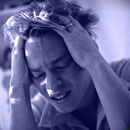 Meniere’s disease, also known as morbus meniere or
Meniere’s syndrome, is an uncommon disorder of the inner ear.
Modern medicine does not know why this disease develops or
what actually causes it, but we do have a large amount of
information about how the disorder progresses and ways to
treat it. Since the exact cause is unknown (doctors say it is
an idiopathic
disease), there is no known cure for this disorder. The
treatments are intended to reduce or prevent the
Meniere’s disease, also known as morbus meniere or
Meniere’s syndrome, is an uncommon disorder of the inner ear.
Modern medicine does not know why this disease develops or
what actually causes it, but we do have a large amount of
information about how the disorder progresses and ways to
treat it. Since the exact cause is unknown (doctors say it is
an idiopathic
disease), there is no known cure for this disorder. The
treatments are intended to reduce or prevent the  Other disorders of the body or ear may produce some
or all of the symptoms of Meniere’s disease. They are said to
be "mimics" of this disorder. Two of the more interesting
mimics are acoustic
neuroma and
autoimmune inner ear disease. Since these may have
specific treatments unique to each disorder, often a physician
will do special tests or examinations to determine if any of
these other disorders can be causing the patient’s symptoms.
These will be mentioned further on, under " differential diagnosis
."
Other disorders of the body or ear may produce some
or all of the symptoms of Meniere’s disease. They are said to
be "mimics" of this disorder. Two of the more interesting
mimics are acoustic
neuroma and
autoimmune inner ear disease. Since these may have
specific treatments unique to each disorder, often a physician
will do special tests or examinations to determine if any of
these other disorders can be causing the patient’s symptoms.
These will be mentioned further on, under " differential diagnosis
."